
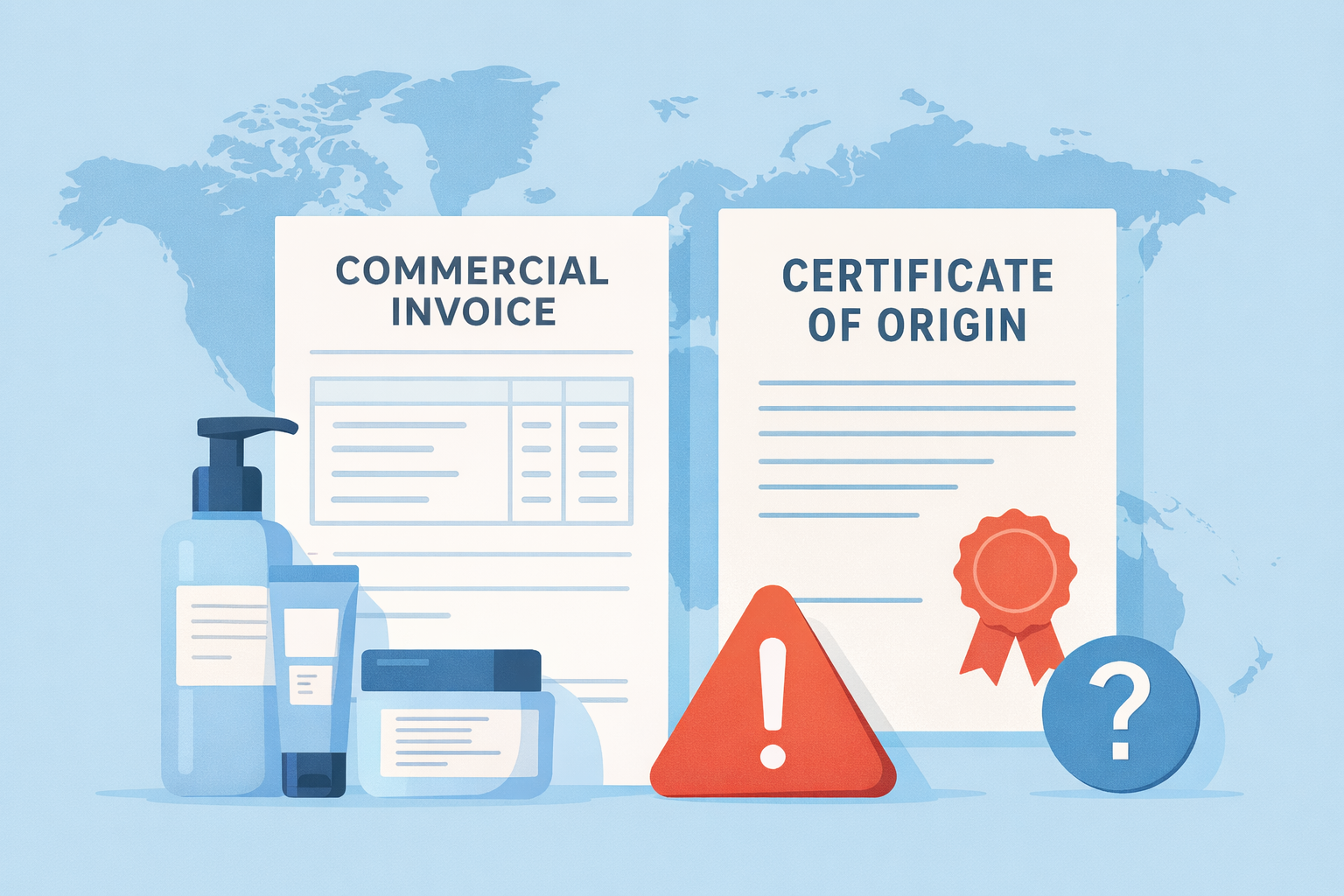
Common Compliance Mistakes in Cosmetic Exports and How to Avoid Them
Exporting cosmetic products requires strict adherence to both FDA guidelines and international regulatory standards. Even minor errors in documentation, labeling, or certificates can result in shipment delays, customs rejection, or legal penalties.
Frequent Compliance Mistakes
How to Avoid These Mistakes
Verify All Documentation: Ensure Commercial Invoices, Certificates of Origin, and CFS/GMP certificates are complete and accurate.
Check Ingredient Compliance: Review restricted and banned substances in target markets (FDA, EU, GCC, ASEAN).
Follow Labeling Standards: Confirm all labeling aligns with FDA and international cosmetic labeling requirements.
Harmonize Documents: Ensure consistency between invoices, certificates, and packaging.
Legalization & Apostille: Obtain ACMA-supported apostille or embassy legalization for required documents.
Use ACMA Guidance: Leverage ACMA certification and self-help programs to meet international compliance efficiently.
ACMA’s Role in Reducing Compliance Risks
The American Cosmetic Manufacturers Association (ACMA) supports exporters by:
Issuing recognized certificates such as GMP, CFS, BSE, and TSE.
Assisting with embassy legalization and apostille processes.
Providing guidance to ensure consistency between export documents, labeling, and product formulation.
Reducing the risk of delays, fines, and customs rejection for cosmetic exports.